Nollywood origins debate: what the veterans said and what the film record shows

The Nollywood origins debate is back. A viral clip of veteran actors Kanayo O. Kanayo, Patience Ozokwo, Charles Awurum and Stephen Alajemba has restarted an old argument: did Nigeria’s film industry begin with Living in Bondage in 1992, or long before it? Both sides have a point. Here is what the actors said, what the film record shows, and why the answer depends on whether you mean Nigerian cinema or the home-video business that became Nollywood.
By Editorial Team
What we know
- A viral video (REPORTED). A clip of the four actors, who Legit.ng reports are currently in Ghana, has been widely shared on X. Galaxy TV and Legit.ng both covered it on 6 October 2026.
- The main argument (REPORTED). The veterans say Nigerian filmmaking did not start with Living in Bondage. “We started movies… before you got to Living in Bondage,” Ozokwo says in the clip, according to Galaxy TV.
- The key distinction (REPORTED). Kanayo, who appeared in Living in Bondage, says the 1992 film’s importance is that it launched the home-video model, not that it was the first Nigerian film. “You have to be able to distinguish between films and home videos,” he says, as quoted by Galaxy TV.
- A seniority claim (CLAIM). In the same clip, Kanayo says he entered the industry before Pete Edochie, Legit.ng reports. This follows Edochie’s comments on the Curiosity Made Me Ask podcast a few weeks ago that he began acting at 15 and that no actor in Nollywood is senior to him.
Why the Nollywood origins debate keeps coming back
The argument keeps coming back because “Nollywood” means two different things. To many people it simply means Nigerian film. To historians it usually means something narrower: the low-budget, direct-to-video industry that grew out of Lagos and the south-east in the 1990s.
Living in Bondage is the landmark of that second meaning. Directed by Chris Obi Rapu and produced by Kenneth Nnebue, it was shot straight to video and sold on cassette, so people could watch it at home rather than in a cinema. Its success created a template that thousands of later films followed. We tell that story in detail in our history of Nollywood from Living in Bondage onwards.
Kanayo made the same point in the clip. Before the video era, he said, the only way to watch a film was in a cinema. Home video gave families their own copies, and that access is what turned filmmaking into a mass industry.
What came before 1992
The veterans are right that Nigerian screen storytelling is much older than Living in Bondage.
- Yoruba travelling theatre. Hubert Ogunde’s touring company and other Yoruba theatre troupes performed across the country from the 1940s onwards. Several of those troupes later moved into film.
- Celluloid cinema in the 1970s and 1980s. Filmmakers such as Ola Balogun, Eddie Ugbomah and Ade Afolayan, also known as Ade Love and the father of director Kunle Afolayan, made feature films for cinemas. Legit.ng notes that users on X added these names to the debate.
- Bisi, Daughter of the River (1977). Stephen Alajemba offered this film as an example of early Nigerian cinema. The date is right, but one detail needs correcting. In the clip he links it to Ogunde, but film records credit the film to the director Jab Adu, with Patti Boulaye in the title role. It was one of the biggest Nigerian box-office hits of its era.
- Television drama. Many of today’s veterans first became famous on television. Pete Edochie’s role as Okonkwo in the 1987 television adaptation of Things Fall Apart is still his best-known performance, and he cited it in his podcast interview.
The word “Nollywood” itself came much later. It spread after New York Times articles about the Nigerian video boom in 2002, as our history guide explains.
So who is right?
Both camps are describing real history, just different parts of it.
If the question is “When did Nigerians start making films?”, the answer is decades before 1992. Theatre companies, cinema directors and television producers were telling Nigerian stories on screen in the 1970s and 1980s, and some of those films drew big crowds.
If the question is “When did the industry we now call Nollywood begin?”, most historians still point to the early 1990s. The direct-to-video model that Living in Bondage made popular is what gave the industry its scale, its business structure and, eventually, its name.
The seniority question between Kanayo and Pete Edochie is harder to settle and matters less. It depends on whether you count stage work, television or film. Neither claim can be checked against a single official record.
Why it still matters
This is more than a row about who came first. How the industry tells its own history affects which pioneers are remembered and studied. Today’s box-office records are often measured against older successes, and you can see how the top earners compare in our list of the highest-grossing Nollywood films.
It is also a reminder of how fast the industry is losing that generation. Olu Jacobs, whose name also came up in the discussion, was buried in Lagos last week. We covered the tributes in Olu Jacobs laid to rest after a night of tributes. Veterans telling their own stories on video, as in this clip, are now part of the record.
What happens next
- Pete Edochie has not yet publicly responded to Kanayo’s seniority claim, as far as we could find. A reply is likely, given how widely the clip has been shared.
- More veterans may weigh in. Debates like this tend to return whenever an older film is remastered, re-released or remade.
- For readers who want the full timeline, our history guide covers the roots, the home-video boom, the return of cinemas and the streaming era.
More Nigerian entertainment: Nigerian Entertainment.
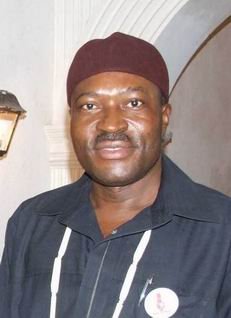
Photo credits: Featured image: A Nollywood film shoot on location (illustrative). Photo: Bestvillage, via Wikimedia Commons (CC BY-SA 4.0). Source. In-article image: Kanayo O. Kanayo in Lagos, 2008. Photo: Niyi Tabiti, via Wikimedia Commons (CC BY-SA 3.0). Source.
Sources
- Galaxy TV: Living in Bondage not beginning of Nigeria’s film industry — Kanayo, others (6 Oct 2026)
- Legit.ng: Kanayo, Patience Ozokwo and others spark debate on Nollywood’s true origins (6 Oct 2026)
- Archivi.ng: Jab Adu directed Nigeria’s highest-grossing film in the 1970s
- IMDb: Bisi, Daughter of the River (1977)
Share this story