Lagos Life game passes 3 million players and adds Abuja and Port Harcourt: what’s new
The Lagos Life game has passed 3 million players, less than a week after it launched on Nigeria’s Independence Day. Its creator says the browser game now also covers Abuja and Port Harcourt, and reports say it has started earning real money. When we first wrote about it on 6 October, it had just passed one million. Here is what has changed since then, and what the numbers do and do not tell us.
By Editorial Team
What we know
- 3 million players (CLAIM). Developer Shalom Rayhamen posted on 7 October that the game had reached 3,058,259 total players, with 114,224 people online at once, Isakaba reports.
- 26.7 million visits (CLAIM). The same update showed more than 26.7 million visits since launch, about 2 million of them on 7 October alone at the time of the post, according to Isakaba.
- Two new cities (FACT). On 6 October, as the game passed 2 million players, Rayhamen announced that Abuja and Port Harcourt were live, Vanguard reports.
- Revenue (REPORTED). Isakaba reports that the game had brought in nearly $50,000 in revenue for the team by the time it passed 2 million players. The developer has not published a breakdown.
- Not audited (FACT). All of the player and visit figures come from the game’s own dashboard or its creator. Vanguard notes that they have not been independently audited.

How fast the Lagos Life game has grown
The game launched on 1 October. By 5 October its dashboard showed just over 1.2 million players, as we reported in Lagos Life passes 1 million players. By 6 October it was past 2 million, and by 7 October past 3 million.
That is roughly a million new sign-ups a day at its peak. The number of people playing at the same moment has stayed fairly steady, at about 100,000 to 120,000 across the updates reported by Vanguard and Isakaba. That suggests a large group of regular players, plus many curious visitors who sign up once and may not return.
A caution on what “players” means. The total counts accounts created, not daily users. Some users have said sign-ups do not need email verification, so one person could make several accounts. The figure that matters more over time is how many people come back each day.
What is new in the game
Abuja and Port Harcourt are the biggest change. “You asked for your cities. I built them,” Rayhamen wrote on X on 6 October, according to Vanguard. Players can now move between three Nigerian cities instead of one.
The core of the game is the same. As Vanguard explains, players create a character, look for work, earn and spend virtual naira, pay rent, socialise and look after their character’s needs. Each player still starts in one of two situations: “Nepo”, born into money and connections, or “Lapo”, starting poor and relying on micro-loans. The joke works because so many young Nigerians recognise both.
The game was inspired partly by Rayhamen’s childhood love of The Sims 3, Vanguard reports. She has also credited Lagos Run, an earlier Nigerian browser game in which players drive a danfo bus through Lagos traffic.
Where the money comes from
The virtual naira in the game is not real money. The real income comes from advertising inside the virtual city, such as roadside billboards that brands can rent, which we described in our first report. Isakaba’s figure of nearly $50,000 is reported, not confirmed by published accounts.
Even so, it is a striking number for a free game built by one developer and launched a week ago. It shows that Nigerian brands are willing to pay to reach a young audience in a space that feels local.
The debate it has started
The game has moved from novelty to talking point. Some well-known Nigerians have joked online that real life in Lagos is hard enough without a virtual version, while fans argue that the game is harmless fun and a way to laugh at shared struggles. Like Bimbo Ademoye’s film, which passed 10 million YouTube views this month as we reported in My 30th Wedding passes 10 million views, it shows how quickly Nigerian audiences can rally around something made for them. Lagos itself has had a big week online, too: a young woman’s viral recreations of fashion shoots on Lagos streets took her all the way to Chanel’s runway, as we reported in Rachel Ojuromi’s journey to Paris.
Isakaba also notes that the game’s growth raises questions about online safety, since it lets strangers see and chat with each other. Parents of younger players may want to check what their children are doing in the game, as they would on any social platform.
How to stay safe
- Use the official game only. Copycat sites and a third-party crypto token using the game’s name have appeared, as we reported on 6 October. The creator has not presented any token as an official product.
- Never pay to “unlock” virtual cash. The game’s money is virtual.
- Protect personal details. Do not share phone numbers, addresses or bank details with other players.
What happens next
- Watch the number of people online at once. If it holds above 100,000 after the launch buzz fades, the game has a lasting audience.
- More cities may follow, given how quickly Abuja and Port Harcourt were added.
- Any funding, studio or partnership announcement from the developer would be a major next step.
- We will update this story if independently checked figures or revenue details are published.
More viral stories: Viral & Trending.
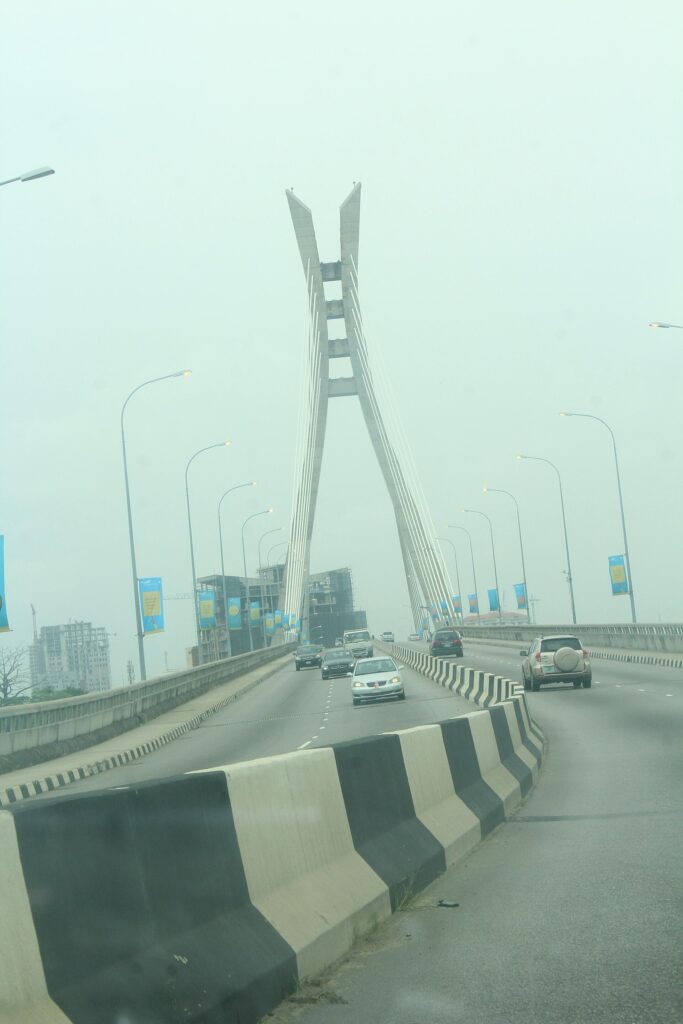
Photo credits: Featured image: The Lekki–Ikoyi Link Bridge, Lagos (illustrative, not from the game). Photo: Yemi festus, via Wikimedia Commons (CC BY-SA 4.0). Source. In-article image: A canoe on the Lagos Lagoon beneath the Third Mainland Bridge (illustrative). Photo: Kaizenify, via Wikimedia Commons (CC BY-SA 4.0). Source.
Sources
Share this story