Judi Dench eyesight: why the 91-year-old says she can no longer act or read
Judi Dench eyesight loss has now ended her acting career, the 91-year-old said this week. Speaking on BBC Radio 4’s Today programme on Thursday 22 October, the Oscar-winning star of Shakespeare in Love and the James Bond films said age-related macular degeneration means she can no longer perform on stage or screen, read, or recognise faces. Here is what she said, how her condition has changed since she first spoke about it, and what the illness actually is.
By Editorial Team
What we know
- Her words (FACT). “I can’t be on stage. I can’t do a play anymore. I can’t do a film anymore. I can’t read anymore,” Dench told the presenter Emma Barnett, according to the BBC.
- The condition (FACT). She was diagnosed with age-related macular degeneration (AMD) in 2012, the BBC and The Guardian report.
- Faces (FACT). She said she sometimes goes up to the wrong people “and give them an almost hug” before realising her mistake. She told Barnett she could not see her face at all, The Guardian reports.
- On ageing (FACT). Asked how ageing was going, she said “Rubbish”, NBC News reports, and added that there is “nothing to say for it at all”.
- A new book (REPORTED). The Guardian says she was speaking ahead of the publication of a memoir, Is It Too Late to Make a Run for It?, written with the theatre director Brendan O’Hea.
How Judi Dench eyesight problems progressed
Dench has spoken openly about her sight for more than a decade, and this week’s words mark the end of a long, gradual decline.
In 2014, The Guardian notes, she said reading had become difficult but promised to keep working for as long as she could. By 2023 she said she could no longer see on film sets, and that friends were helping her learn scripts by repeating lines to her until she knew them. Last year she said she could no longer go out alone, because she feared walking into things or falling.
In 2024 she told NPR that the condition had worsened, NBC News recalls, while insisting to CBS Mornings that she could still act even if she might walk straight past an old friend. This week’s statement is the first time she has said plainly that performing is no longer possible.
What macular degeneration is
AMD affects the macula, the small central part of the retina at the back of the eye that we use for detail: reading, recognising faces, watching a screen. As it gets worse, the centre of what a person sees becomes blurred, distorted or dark, while side vision usually remains. That is why someone with AMD may still move around a familiar room but cannot read a script or recognise a person standing in front of them.
It is one of the most common causes of sight loss in older people. Some forms can be slowed with treatment, but there is no cure for the damage once it has happened. Dench has not said which form she has, and we will not guess.
Seven decades on stage and screen
Dench’s career spans more than seven decades across theatre, television and film. The BBC notes that she won the Academy Award for best supporting actress in 1999 for playing Queen Elizabeth I in Shakespeare in Love. She became famous worldwide as M, James Bond’s boss, starting with GoldenEye in 1995 as the first woman to play the role, and appeared in eight Bond films in total, The Guardian says. Her stage roles include Juliet, Lady Macbeth and Cleopatra.
Our guide to how Oscar voting works explains the Academy process behind wins like hers.
Shakespeare, bluebells and Sidney Poitier
The interview was not all sad. She said she is still “besotted” by Shakespeare’s sonnets: “It’s the rhythm of it. It’s the rhythm of your heart.” She recalled watching her brother play King Duncan in Macbeth when she was nine, and the moment she knew acting was for her.
She remembered Sidney Poitier coming to her dressing room in New York, where she was appearing in Amy’s View: “So charming. Very tall.” She also told Barnett that she could not see a single bluebell this summer, but that she knows what her trees look like, partly from memory.
Asked whether she had a view on who should play the next James Bond, she replied simply: “No.”
Why it matters
Dench is far from the only well-known performer to speak publicly about health this month. Christina Applegate recently talked about her MS misdiagnosis, and the Beach Boys’ Mike Love’s health made headlines earlier in October. Her frankness gives millions of people living with sight loss a clear picture of what the condition can mean in later life.
What happens next
Dench has not announced a formal retirement, but she has said that stage and film work are no longer possible. Readers can expect to hear more about her life when the memoir with Brendan O’Hea is released; the publisher had not confirmed a date in the reports we read. The full interview is available on BBC Sounds. More stories are in our Celebrity News section.
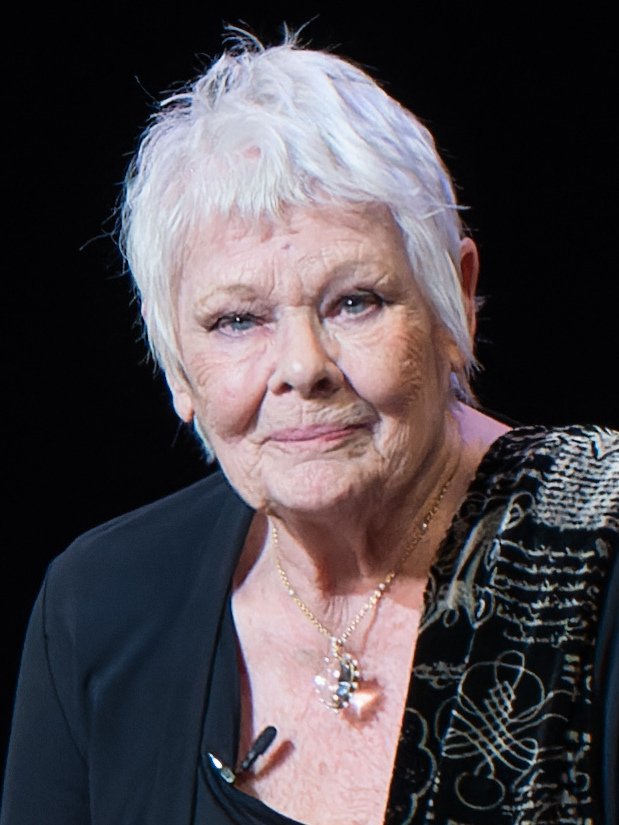
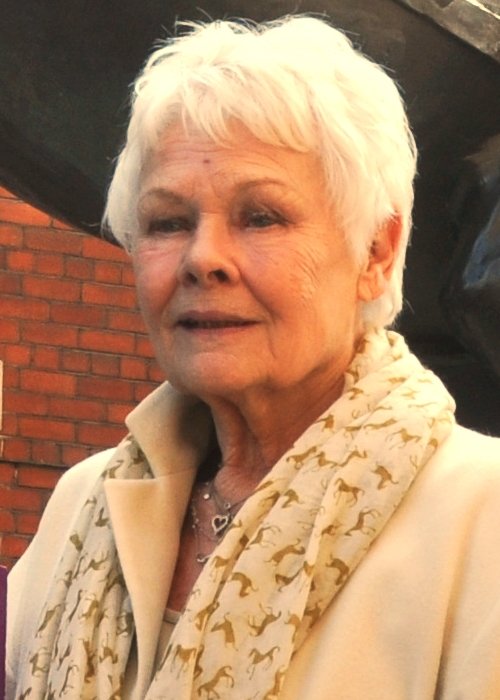
Photo credits: Featured image: Judi Dench at The Dames event at the London Palladium, March 2023 (archive image). Photo: Raph_PH, via Wikimedia Commons (CC BY 2.0). Source. In-article image: Judi Dench unveiling a painting at St Paul’s Church, Covent Garden, March 2015 (archive image). Photo: The National Churches Trust, via Wikimedia Commons (CC BY 2.0). Source.
Sources
Share this story