YouTube Music AI song labels: player markers for primarily generative tracks start rolling out
YouTube Music AI song labels began rolling out on 14 October 2026. Tracks created primarily with generative AI now get a marker on the player page, with more detail a tap away. Here is what YouTube announced, how it compares with Apple Music and Spotify, and what it means for listeners.
By Editorial Team
What we know
- Launch (FACT). YouTube’s official blog dated 14 October 2026 says YouTube Music is rolling out labels so listeners can see when a song was “created primarily using generative AI,” including generative models used for composition and vocals.
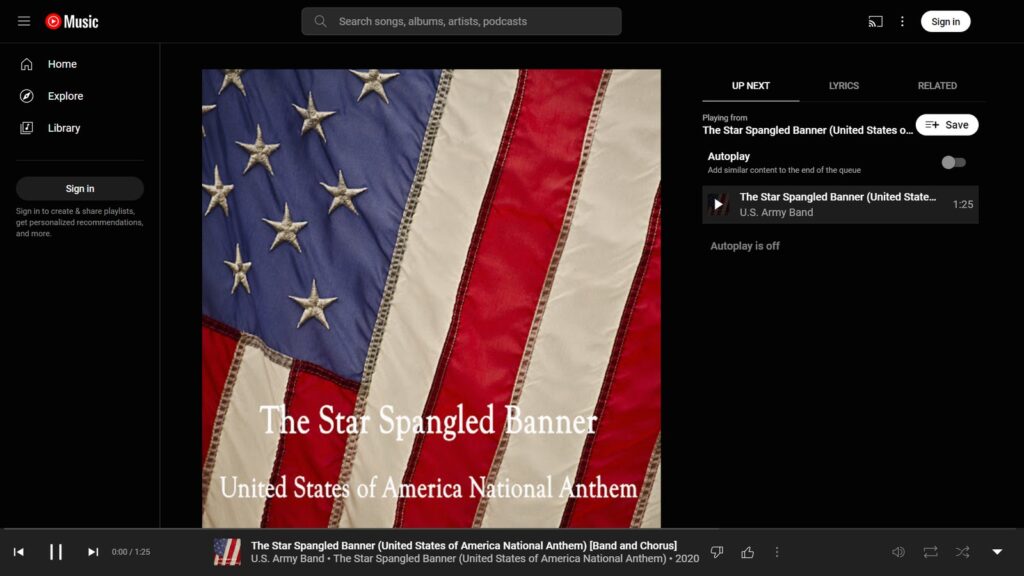
- Where you see it (FACT). The label appears on the player page. Tapping it opens a simple menu with more information. YouTube says the same music labels will expand to the main YouTube app.
- How tracks are identified (FACT). YouTube says it is working with music partners and using its own detection tools, applying labeling principles already used across YouTube.
- Industry context (FACT). Variety notes Apple Music’s plan for “Made by AI” labels later in 2026, Spotify’s “AI Personas” labels for apparent AI artist profiles, and Tidal’s promise to label AI music and block those tracks from accruing royalties.
- Advocacy backdrop (FACT). Over the summer, groups including the RIAA, IFPI, the Grammys organisation and SAG-AFTRA pushed for clearer “AI-Generated” / “AI-Assisted” indicators for fans.

What the YouTube Music AI song labels do — and do not do
YouTube’s wording is “primarily using generative AI.” That is a threshold, not a full production diary. A human artist who uses an AI tool for a minor texture may not meet the same bar as a track whose composition and vocals were model-generated. The blog points listeners to YouTube Help Center disclosure guidelines for the fine print.
The product design choice is transparency on the Now Playing surface rather than a buried settings toggle. For casual listeners meeting YouTube Music AI song labels while doom-scrolling Autoplay, a visible chip is the difference between knowing and never knowing. For African markets where YouTube Music is often the default music app because it piggybacks on YouTube’s already-dominant video graph, that chip will show up in the same place people already tap lyrics and queue controls.
YouTube Music AI song labels are not a ban. YouTube is not announcing that AI tracks disappear from search. The company is saying listeners asked for clarity, and the UI will provide it.
How this compares with Apple, Spotify and Tidal
Apple Music’s “Made by AI” plan, Spotify’s persona labeling, and Tidal’s harder royalty line show three different philosophies. Apple emphasises track-level marking for consumers. Spotify has publicly stressed labeling AI artist identities. Tidal mixes labeling with a royalty penalty. YouTube’s move is closest to Apple’s consumer-facing track label, with the twist that YouTube must also police an enormous user-upload video corpus when the same labels expand to the main app.
Variety quotes IFPI and RIAA leaders arguing that fans want to know whether and how generative AI was used. That lobbying did not invent the listener complaint; it organised it. YouTube’s blog mirrors the language — “listeners have told us they want transparency” — which is both product research and industry politics.
Why Nigerian and diaspora listeners should care
Afrobeats, gospel and street-pop catalogues on YouTube are already flooded with cover versions, speed-ups, nightcore edits and impersonator uploads. Generative AI adds another layer: voice-clone covers, fake “new singles,” and spam albums designed to catch autoplay. A label will not solve impersonation alone, but it gives a shared vocabulary when fans argue in comment sections about whether a viral clip is a real session vocal.
Artists and labels who disclose AI use early may avoid trust shocks later. Artists who hide model vocals while marketing “live emotion” will face a sharper backlash once the chip appears. That is a reputation story as much as a tech story.
In short, YouTube Music AI song labels are a listener UI change with industry politics behind them.
Limits and open questions
Detection will err. Partners may under-disclose. Some hybrid productions will sit in grey zones. YouTube has not published a public false-positive rate in the blog post. Listeners should treat the label as a strong signal, not infallible scripture. Regulators and collecting societies may still demand finer “AI-assisted” vs “AI-generated” splits than a single chip can show.
Practical checklist for artists and labels
1. Read YouTube’s current disclosure help pages before you upload. 2. If generative tools wrote melody or vocals, assume you may be labeled and decide your marketing language accordingly. 3. If you only used AI for mastering experiments or reference sketches that never hit the master, keep documentation — disputes will be documentation fights. 4. For cover and tribute channels popular in Nigeria, expect more listener scrutiny when a voice sounds “too clean” or oddly generic; the label gives critics a concrete UI hook.
None of that is legal advice. It is how product changes become career hygiene.
What happens next
Watch the expansion from YouTube Music to main YouTube, Apple’s “Made by AI” ship date, and whether Spotify deepens track-level labeling beyond personas. For creators, the near-term task is reading YouTube’s disclosure help pages before upload. For listeners, the habit change is simple: glance at the player chip before you share a “new song” screenshot as fact.
Photo credits: Featured image: YouTube Music web player interface (December 2023 screenshot). Alphabet Inc. (public domain) Photo: Alphabet Inc., via Wikimedia Commons (Public domain). Source. In-article image: Listener with headphones — illustrative of music-app listening. Photo: Shixart1985, via Wikimedia Commons (CC BY 2.0). Source.
Sources
- YouTube blog: YouTube Music adds new labels for AI music
- Variety: YouTube to label AI-generated songs
- TechCrunch: YouTube Music AI labels
- 9to5Google: YouTube Music AI labels on Now Playing
- Centertainment: 2027 Grammy submissions
- Centertainment: Solana EQUAL Africa on Spotify
- Centertainment: Burna Boy GTA 6 AfroBank FM
- Centertainment: Music category
Share this story