How Eurovision voting works: juries, televotes and the 12 points explained
Eurovision voting looks chaotic on screen, with spokespeople from dozens of countries reading out points while the scoreboard lurches. The system underneath is precise: half the result comes from professional juries, half from viewers, and every country hands out the same 12-10-8 scale. This guide explains how Eurovision voting works after the major rule changes of 2026, and what it means for the 2027 contest in Bulgaria. Current as of October 2026.
By Editorial Team
The short answer
- Two sets of points per country: each participating country gives one set from a national jury of seven music professionals and one from its viewers.
- The scale: each set awards 12 points to its favourite song, 10 to the second, 8 to the third, then 7 down to 1. That is 58 points per set.
- The rest of the world votes too: viewers in non-participating countries, such as the US and Canada, can vote online, and their votes count as one extra country.
- You cannot vote for your own country. Neither can juries.
- New for 2026: juries returned to the semi-finals, juries grew from five to seven members, and the vote cap was halved from 20 to 10 per payment method.
How Eurovision voting works: juries
Each broadcaster taking part appoints a national jury of seven. Under the official rules and the European Broadcasting Union’s voting explainer:
- At least two jurors must be aged 18 to 25. Since 2026 the pool can include music journalists, music teachers, choreographers and stage directors as well as musicians and industry figures.
- Jurors vote the night before each live show, watching a full dress rehearsal known as the “Jury Show”.
- Each juror ranks every song from first to last, with no ties and no abstentions, judging composition and originality, stage performance, vocal ability and overall impression.
- The seven rankings are combined into one national ranking, and the top ten songs get 12, 10, 8 and 7 to 1 points.
Jurors sign a declaration that they will vote independently, and they are barred from discussing their rankings or posting their preferences online before the contest ends. The EBU says juries were brought back in 2009, after years of televote-only results, partly to balance “diaspora voting”, where viewers back acts from countries they have a personal connection to.
How Eurovision voting works: the public
Viewers in each participating country can vote by phone, SMS or online during the show. Their votes are counted, the songs ranked, and the same 12-to-1 points applied, so a country of 400,000 people hands out exactly the same points as Germany.
Viewers everywhere else vote online through the “Rest of the World” vote, introduced in 2023. All those votes are pooled into a single ranking worth one country’s 58 points. Because of that extra set, the public share of the result is slightly more than half: 50.7% audience to 49.3% jury, the EBU says.
Some details catch people out:
- Ten votes per method: from 2026 each person can cast up to 10 votes per payment method per show, down from 20. The EBU says it will “actively encourage” fans to spread those votes across several songs.
- Several methods, several caps: because voting channels do not share personal data, the EBU acknowledges one person can use SMS, phone and online separately.
- Own-country votes do not count, and attempted extra votes may still be charged, depending on local telecom rules.
- Votes are checked by country using phone prefixes and card details, and the result is recalculated by an independent compliance monitor.
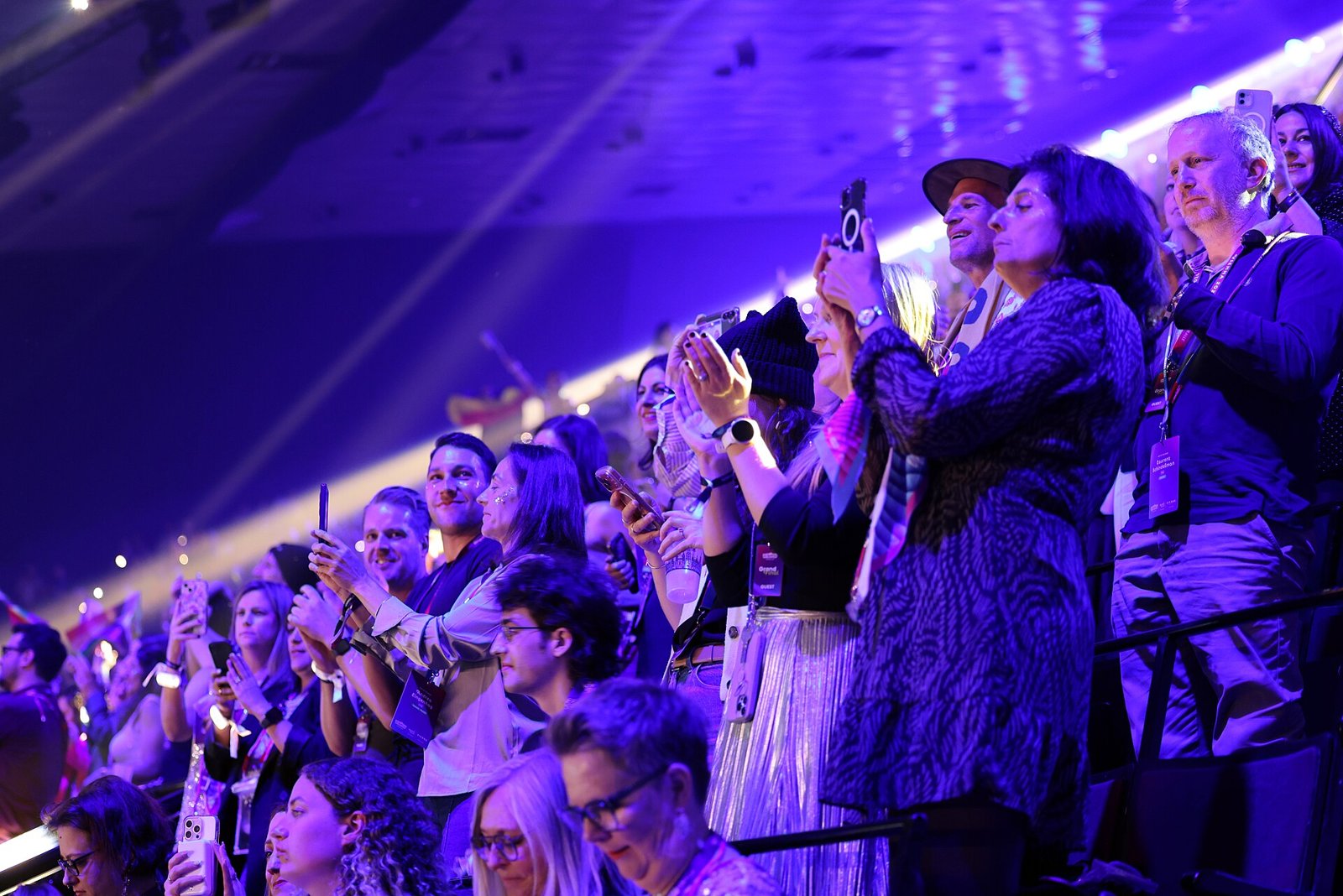
Semi-finals and the Grand Final
For 2026, 35 countries took part. The “Big Five” (France, Germany, Italy, Spain and the UK, the biggest financial contributors) and the host country qualify automatically, although Spain did not take part in 2026: the BBC’s list of automatic finalists that year was the UK, France, Germany, Italy and host Austria. Everyone else competes in two semi-finals, and the ten highest-scoring songs from each go through.
From 2023 to 2025, semi-finals were decided by viewers alone. In 2026 juries returned there, so semi-finals now use the same roughly 50/50 split as the final, BBC guidance confirms. Qualifiers are announced in no particular order, and full scores are published only after the final.
In the Grand Final, each country’s jury spokesperson reads out their 12 points live, building the jury scoreboard. In recent contests the public points have then been revealed as one total per song, starting with the act lowest on the jury scoreboard, which is what produces Eurovision’s late twists.
What happened in 2026
The 70th contest was held in Vienna on 16 May 2026. Bulgaria’s DARA won with “Bangaranga”, scoring 516 points: 204 from juries and 312 from the public. It was Bulgaria’s first win, the first time since 2017 that juries and viewers picked the same winner, and the biggest winning margin in the contest’s history at 173 points, according to the official Eurovision site. Israel was second with 343 and Romania third with 296. The UK finished last with one point, BBC News reported. The EBU says votes came from 148 countries.
Why the rules changed
The EBU announced the 2026 overhaul in November 2025 after what its director of the contest, Martin Green, called “concerns expressed by participating broadcasters and fans”. Alongside the voting changes, it introduced stricter limits on promotional campaigns, including those backed by governments, and new technical checks for coordinated or fraudulent voting. In an open letter he said the old 20-vote limit had not unduly influenced past results, but the change was made to encourage “more balanced participation”.
Eurovision voting compared with other contests
Eurovision blends expert and public votes in a way few big shows do. The Grammys are decided by industry members alone (see how Grammy voting works), while reality shows such as Big Brother Naija, Africa’s version of Big Brother, rely on paid public votes (see how BBNaija voting works). Winning Eurovision also does not guarantee chart success; for how charts are counted, see how Billboard charts work. For another giant live music moment, read how the Super Bowl halftime show performer is chosen.
What to watch
The 71st contest will be held at Arena Burgas in Burgas, Bulgaria, with semi-finals on 11 and 13 May 2027 and the Grand Final on 15 May 2027, all at 9pm CEST (8pm UK time), according to the EBU. Watch for the 2027 rules and the list of participating broadcasters, which usually follow in the autumn and winter. More in Music and International Entertainment.
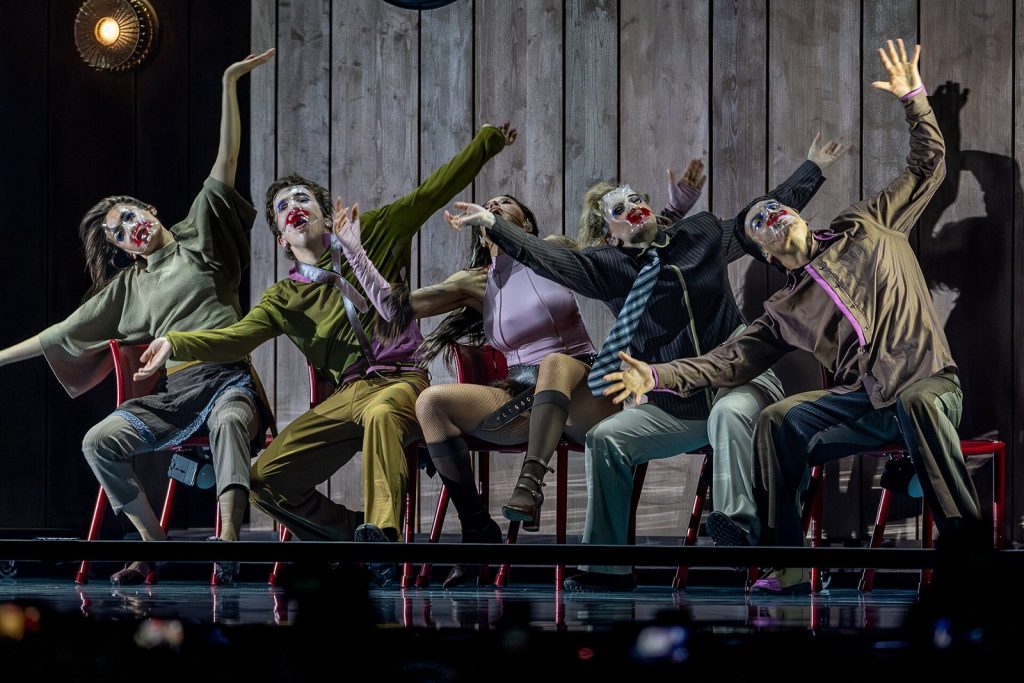
Photo credits: featured image, DARA performing “Bangaranga” in the 2026 Grand Final, by Quejaytee / Wikimedia Commons, CC BY-SA 4.0; in-article image by Tobias Kleinlercher / Wikimedia Commons, CC BY-SA 4.0.
Sources
- EBU: Rules of the Contest
- EBU: Everything you need to know about how the voting system works
- EBU: Changes to voting rules for 2026 (21 November 2025)
- EBU: Open letter from Martin Green CBE
- BBC: Eurovision Song Contest 2026 voting
- Eurovision.com: DARA wins for Bulgaria (17 May 2026)
- BBC News: Bulgaria wins, UK comes last
- EBU: Burgas to host Eurovision 2027
- EBU: 2023 voting changes FAQ
Share this story